In today’s article, we want to share an international experience about SST in Finland and to emphasize the richness of relationships within our professional community.
This article is a testimony of a connection that began at the IV International Symposium on Single-Session Therapy (SST), held in Rome in 2023. That occasion brought about a special relationship between the writer of this article, Ester Fantoni, and Elina Lillstrang.
Meeting Elina has been one of the unexpected gifts that SST has brought into my life. Beyond our professional exchange, I have found a colleague with whom I can openly discuss ideas, doubts and new projects, and a friend with whom I have shared experiences in both Finland and Italy. Knowing that there is someone hundreds of kilometres away who looks at helping conversations in such a similar way has enriched me both professionally and personally.
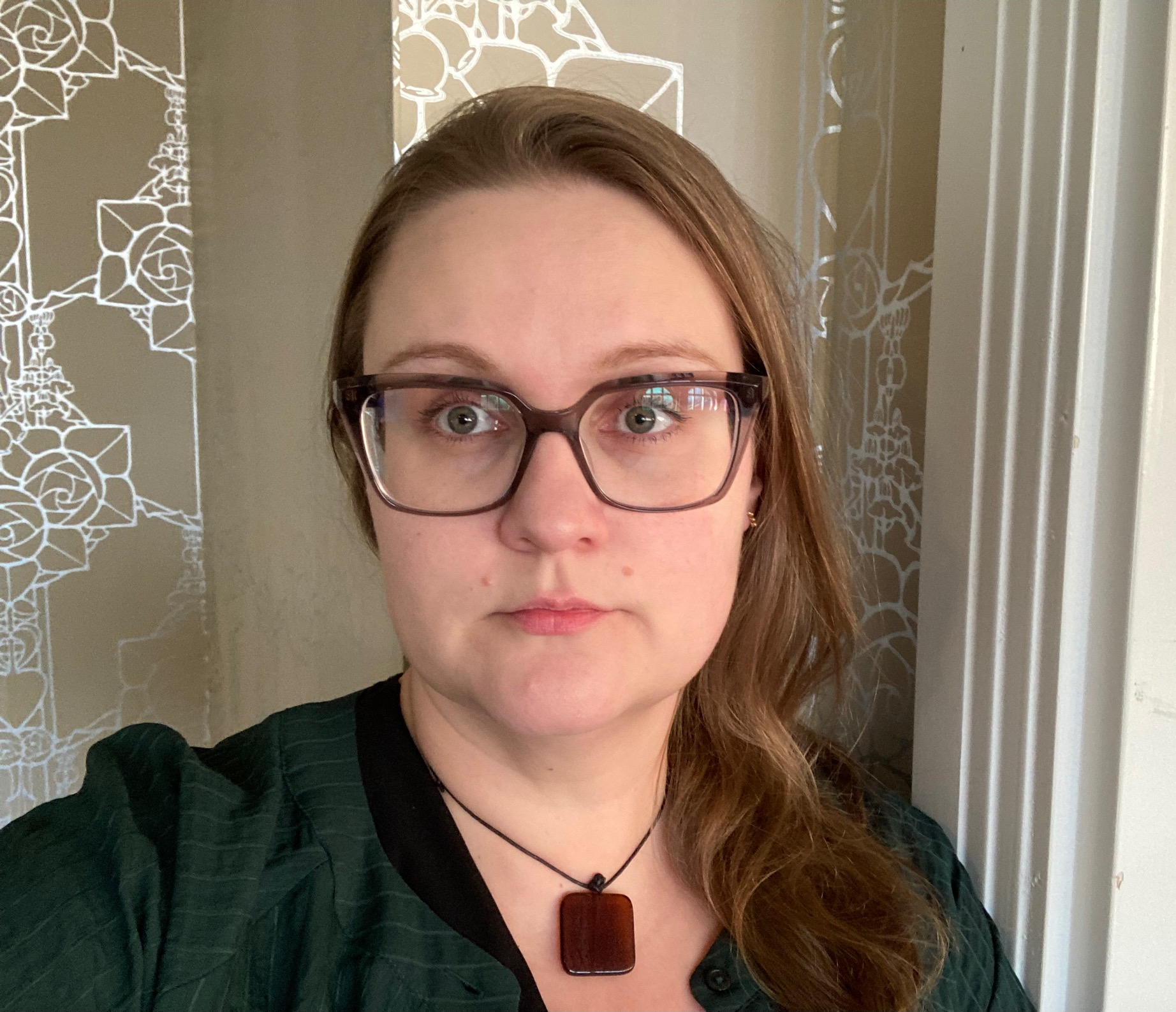
Elina Lillstrang is a Growth Psychologist and entrepreneur based in Jyväskylä, Finland. She holds a Master of Science in Psychology and a Master’s degree in Musicology, both from the University of Jyväskylä, along with a Pedagogical Qualification in Adult Education. She is a certified Solution-Focused Brief Therapist and Mediator.
Elina has worked in work-life environments throughout her career, first as a Recruitment Consultant and later as a Competence Development Manager, before founding her own company as an entrepreneur in 2014. She attended the International Single-Session Symposium in Rome in 2023 and in Chicago in 2025.
Outside of work, she plays the violin, bakes sourdough
bread, and enjoys picking berries and mushrooms in the Finnish forests. She lives with her husband and their two daughters, born in 2014 and 2017.
‘Who was the first person who told you about SST? / When was the first time you heard about SST?
I was studying solution-focused brief therapy in 2019 when a friend of mine asked, a bit puzzled, “How brief can therapy really be?” Like many people in Finland, my friend believed that the effectiveness of therapy depends on how long the process is. That question got me thinking about how I would respond.
I started looking into it: found Windy’s books and writings, read Jeff’s interview and also came across Finnish texts by Pekka Aarninsalo. I felt immediately inspired! I began ordering SST books and working my way through them.
As part of my brief therapy training, I wrote my thesis on this topic. I had a project in collaboration with a client organization in the heavy machinery industry. They wanted support for new and young foremen stepping into their roles and I used SST to help them. The feedback was very positive—both HR and the foremen were excited to see how much impact could be achieved in just one session. After that, I started using SST with other clients as well, and it quickly became my default way of working. To date, I have conducted more than 500 SST sessions, which I call Growth Discussions (Kasvukeskustelu®).
My first thought when I learned about SST was that it could bring both efficiency and a more human approach to organizational cultures. I have worked my whole working career in work-life environments (rather than in healthcare) and in my view SST has a lot to offer outside the therapy world as well.
How do you use SST in your work?
My single-session service is called Growth Discussion. I work mostly online. I have conducted more than 500 discussions across different types of organizations. I have developed my own way of working with Growth Discussions. Each session lasts 60 minutes and is mostly based on solution-focused questions. I have been inspired by Pam Rycroft’s way of describing the process as similar to Mozart’s sonata form—we are both musicologists too 😊
Sometimes I work on larger projects where organizations need support with change. In these cases, Growth Discussions can play at least two roles: they help people cope with change, and they can also provide valuable insight into the current situation within the organization. It is important, however, to design the process carefully so that confidentiality is maintained.
After the COVID pandemic, more and more clients started asking if I could train them to use SST themselves. They are interested in applying it in different types of counselling situations, as well as in leadership. This was my own first thought when I discovered SST, so this development feels very exciting to me!
Since 2022, I have trained around 150 professionals, including business advisors, coaches, HR professionals, volunteers, dietitians, occupational health practitioners, and supervisors. I deliver training online, through summer university programs, and directly for organizations—so this work continues to grow.
I am writing this in June 2026. Right now, “Single Session Leadership” is only just taking its first steps: In the spring, I interviewed seven organizational leaders in different roles. I found that there is a real need for a way of having everyday conversations that is both effective and human. SST may have an important role in this in the future. I have a few pilot projects coming up, which I will share more about on my LinkedIn and website during late 2026 and 2027.
How widespread is SST in Finland, and in what ways is it used?
In Finland, the most visible form of SST is walk-in services run by the church. These services are aimed at young people aged 12–29 and are free of charge. They are offered both online and in person in over 50 locations. I am also involved as a volunteer in this work, which is coordinated by the Finnish Association for Children and Youth (Lasten ja Nuorten keskus). Around 300 walk-in therapists have already been trained, which is a significant number for a country the size of Finland (5,65 million inhabitants).
Over the past ten years, some training has also been provided to professionals in wellbeing services counties, school student welfare services, and family counselling centres. This work has been provided by teams including Pertti Virta, Pekka Aarninsalo, Ben Furman, Tapani Ahola and Maiju Ahola. Regions such as Central Finland and South Ostrobothnia are the most advanced. There are many “seeds planted”—some units and individuals are working this way—but SST is still far from being a dominant approach at a system or national level. I occasionally meet people who have attended these trainings and hear how they are applying SST in their own work in public healthcare.
The first Finnish doctoral dissertation on SST is currently underway. Pertti Virta is working on it at the University of Jyväskylä, combining SST with Open Dialogue in his research.
What do you think is the future of Single-Session Therapy?
I think SS Therapy, SS Thinking, SS Work, SS Mindset and SS Leadership have lot to offer to human interaction in many fields:
I believe SST will continue to expand into different fields like occupational health, counselling, coaching, leadership etc. because it is sustainable way to work.
I hope it will also spread more widely in mental health services globally and in Finland. The timing is quite favourable: resources are limited, there is a need to rethink how services are delivered, and younger generations are increasingly expecting more efficient and meaningful ways of getting support.
Ester Fantoni
Psychologist
Trainee in Systemic-Strategic Brief Therapies
ICNOS Institute